

Table of Contents
- Why Bleaching Causes Hair Breakage and How to Minimize Damage
- How to Prepare Hair for Bleaching
- Performing a Hair Strand Test Before Bleaching
- Choosing the Right Bleaching Powder and Developer
- How Long to Wait Between Bleaching Sessions
- How to Stop Hair Breakage After Bleaching
- Distinguishing Breakage from Shedding
- When to Refer Clients for Professional Help
- Frequently Asked Questions
Last Updated: October 21, 2026
Why Bleaching Causes Hair Breakage and How to Minimize Damage
Bleaching lifts color by breaking chemical bonds, opening the cuticle and weakening the internal structure, leaving fragile strands prone to snapping, splitting, and falling out. Bleach penetrates the shaft and disrupts melanin, but that same action damages the protein structures holding hair together; the more you bleach, the greater the risk.
The key is treating bleached hair as fragile from day one and supporting it with the right products and handling methods: preparation before bleaching, strand testing, proper aftercare, and knowing when to stop.
How to Prepare Hair for Bleaching
Pre-bleach conditioning and moisture loading
Start conditioning 7-10 days before bleaching, hydrated hair resists breakage far better than dry hair.
The day before bleaching, apply one final intensive treatment for 20-30 minutes and rinse with cool water to seal the cuticle. Well-hydrated hair tolerates the chemical stress better.
Scalp protection and sectioning
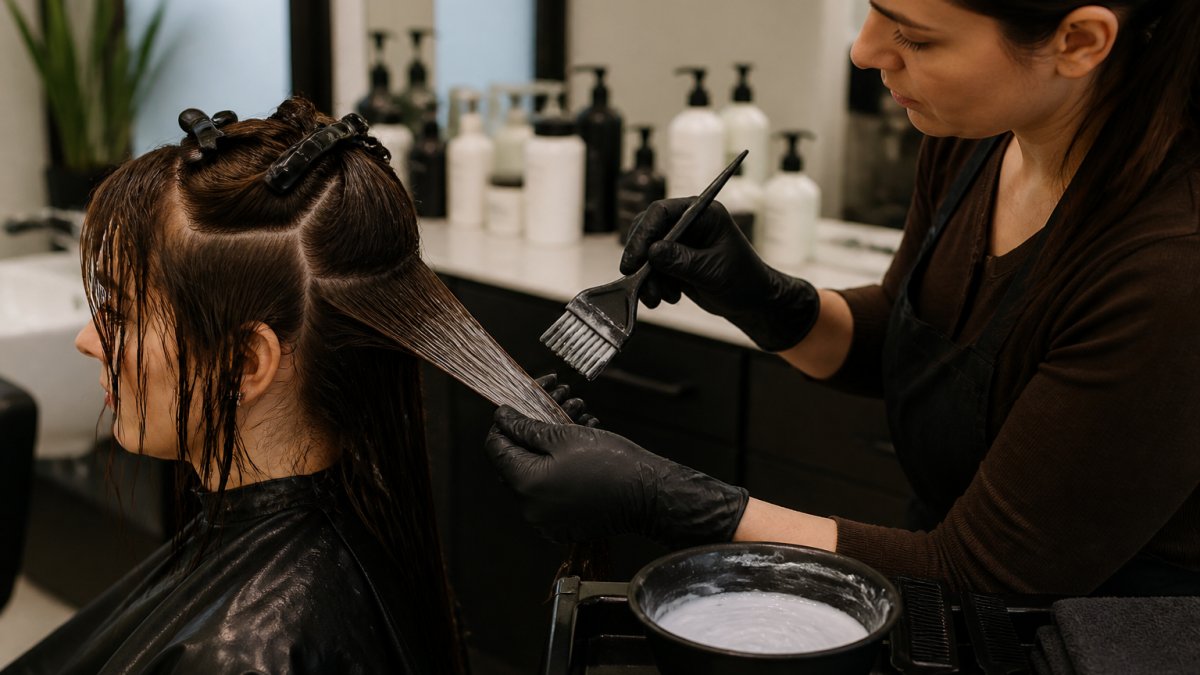
Never bleach on freshly washed hair, wait 2-3 days after the last shampoo so natural oils protect the scalp and reduce irritation and breakage at the root. Apply a barrier cream to the scalp, hairline, and ears to prevent chemical burns and scalp damage. Section hair into 4-6 manageable parts with clips; smaller sections ensure even saturation and prevent the weak spots that uneven processing creates.
Performing a Hair Strand Test Before Bleaching
A strand test reveals exactly how your client's hair will react to the bleach you're using, skip it and you're guessing, and one bad guess can mean severe breakage.
Watch for three things:
- Color lift: Does it reach the desired lightness?
- Hair condition: Does the strand feel elastic or mushy?
- Breakage risk: Does the hair snap when you stretch it gently?
If the strand feels weak, reduce processing time by 5-10 minutes on the full head.
Never assume one client's hair will behave like another's. Porosity, previous color treatments, and natural texture all affect how bleach works.
Choosing the Right Bleaching Powder and Developer
Not all bleaching powders are equal, professional-grade formulas with bond-protecting technology minimize damage during lifting. The SK Colors Pó Plex Dust-Free Bleaching Powder from Sarah K Professional Hair uses Pó Plex technology, a bond-protecting complex that maintains hair integrity during lightening, while the dust-free formula creates a safer salon environment and the infused Legendary Oils Complex adds conditioning during the process itself.

Developer strength matters too: lower volumes process slower but gentler, higher volumes lift faster but stress hair more.
- 20 volume: Gentle lift, best for delicate or previously bleached hair
- 30 volume: Standard lift for most applications
- 40 volume: Fast lift for resistant hair, but increases breakage risk
Match the developer to the hair condition. Fragile hair needs lower volume even if processing takes longer. Speed isn't worth the breakage.
How Long to Wait Between Bleaching Sessions
Patience prevents permanent damage. Wait at least 2-3 weeks between full-head bleaching sessions so the protein structure can stabilize and moisture can rebuild, using intensive protein treatments and conditioning masks 2-3 times per week in that window. For partial services like root touch-ups or balayage, 7-10 days is enough since you're not processing the entire head. Never bleach the same hair twice in one week, the cumulative chemical stress causes severe breakage, split ends, and potential hair loss.
How to Stop Hair Breakage After Bleaching
Aftercare is where most breakage is either prevented or locked in. Hair has different needs at 24 hours, day 7, and week 6, so a staged plan keeps you from over-treating early and under-treating later.
Stage 1: First 24-48 hours, stabilize and protect
The cuticle is still slightly open and the cortex at its most vulnerable, so the goal isn't repair yet, it's avoiding added stress.
- Skip shampoo for at least 24 hours. The cuticle needs time to settle. If the scalp feels tight, mist with water rather than washing.
- No heat, no brushing wet. Air-dry or blot with a microfiber towel. Do not rub.
- Detangle with a wide-tooth comb on damp (not soaking) hair, starting at the ends and working upward in small sections.
If hair feels gummy, stretchy, or snaps during gentle combing in the first 48 hours, stop handling it and move to the triage steps below. Do not apply more chemicals, including toners, until a stylist assesses it.
Stage 2: Days 3-14, rebuild protein and bonds
This is the repair window: bleaching breaks disulfide bonds and damages protein structure, so hair needs both protein and moisture in the right order and ratio.
How to choose among protein, moisture, and bond-repair treatments:
SK Colors Pó Plex Dust-Free Bleaching Powder | Sarah K Professional Hair →
| Treatment type | What it addresses | Signs it's needed | Overuse risk |
|---|---|---|---|
| Protein / reconstructor | Lost protein structure, weak elasticity | Hair stretches and doesn't spring back, feels limp | Brittleness, snapping, cap at 1x per week |
| Moisture mask | Dryness, rough cuticle, frizz | Hair feels straw-like, tangles easily | Can leave hair mushy if used without protein |
| Bond-repair | Broken disulfide bonds from lifting | Hair snaps when wet, feels weak throughout | Generally well tolerated; follow label frequency |
A practical pattern most practitioners recommend: one protein or bond-repair treatment per week, one moisture mask per week, and a leave-in on every wash day, alternated, not layered on the same day.
- Wash 1-2 times per week maximum with a sulfate-free shampoo and lukewarm water.
- Condition every wash, and add a deep mask once weekly.
- Apply a hair oil or serum to ends 2-3 times per week to seal moisture.
Stage 3: Weeks 3-8, maintain and reduce friction
Bleached hair stays fragile for months, not days. The goal shifts from repair to protection.
- Minimize heat. Air-dry when possible. If you must use heat, apply a heat protectant and keep tools on the lowest effective setting. Flat irons and curling wands cause cumulative damage that shows up weeks later.
- Reduce friction during sleep. Loose braids, a low bun, or a silk pillowcase 3-4 nights per week. Tight styles pull at the root and cause breakage at the hairline.
- Trim every 6-8 weeks. Small trims remove split ends before they travel up the shaft.
The single biggest aftercare mistake is doing too much at once. Pick one repair treatment per week, keep washing gentle, and protect hair from friction at night. Consistency beats intensity.
When to stop and get professional help
Some signs mean the hair is past what at-home care can fix. Stop processing and refer to a stylist or, if the scalp is involved, a dermatologist or trichologist.
- Hair feels mushy or gummy when wet
- Strands snap during normal combing or gentle stretching
- Large sections are falling out or matting and won't detangle
- Scalp shows redness, blistering, or open sores
If the cortex is severely compromised, no product will rebuild it. The damaged length has to be trimmed and regrown. Being honest about that early prevents a client from spending money on treatments that cannot work.
Distinguishing Breakage from Shedding
Most people who notice hair on the pillow or in the shower assume the worst. First figure out whether the hair is breaking or shedding, because the two need different responses.
The visual test: look at the end of the strand
Pick up a few strands from the pillow, shower drain, or brush and look at the end closest to the root.
- Shed hair has a small white or translucent bulb at the root end. That bulb is the follicle's anchor. Shedding is part of the normal growth cycle, and most people lose roughly 50-100 hairs a day (the American Academy of Dermatology).
- Broken hair has no bulb. The end is blunt, frayed, or split. Broken pieces are usually shorter than the surrounding hair and show up as scattered short strands rather than full-length hairs.
A quick rule: bulb = shedding, no bulb = breakage. If you see both, you likely have normal shedding plus some breakage, which is common after bleaching.
A simple count to gauge severity
You don't need a lab test. Do a rough count over a few days.
- Normal shedding: a small cluster in the shower or brush, consistent day to day, with bulbs visible.
- Elevated breakage: noticeably more short, bulb-less pieces than usual, especially after washing or combing. This is the signal to add protein or bond-repair treatments and reduce handling.
- Concerning loss: large clumps, patches of thinning, or strands coming out with gentle tugging. Stop bleaching and get a professional assessment.
Do the check on a wash day, not a styling day. Wet, conditioned hair shows the bulb-vs-break difference more clearly, and you'll get a more honest count.
What each result means for your next step
- Mostly shedding with bulbs: reassure. This is normal. Keep up gentle washing and conditioning; no emergency treatment needed.
- Mostly breakage without bulbs: treat it as damage. Add a protein or bond-repair treatment once a week, cut back on heat and tight styles, and book a trim to remove split ends before they travel up the shaft.
- Mixed, with breakage increasing week over week: this is the pattern that precedes serious damage. Pause further bleaching, switch to a gentle wash routine, and have a stylist assess the hair before any new chemical service.
If a client reports heavy loss after bleaching, ask two questions: how many hairs per day, and do you see the white bulbs? The answers separate a normal shed from a damage event and tell you whether to treat or refer.
When to Refer Clients for Professional Help
Some damage requires professional intervention. Stop bleaching and refer the client to a trichologist or dermatologist if scalp damage is visible, a trichologist specializes in hair and scalp health and can assess whether the damage is reversible.
You can prevent hair breakage bleaching causes, it isn't inevitable with the right approach. The Sarah K SOS Recovery Treatment and Sarah K Treatment Reconstructor rebuild damaged structure from within, while the Sarah K My Style Nourishing Mask restores hydration and elasticity.

Frequently Asked Questions
Can I prevent hair breakage when bleaching if my hair is already damaged?
Damaged hair requires extra caution before bleaching. Start with a strand test to assess how your hair will respond. If the test shows significant breakage, breakage, or loss of elasticity, wait 2-3 weeks and apply deep conditioning treatments first. Use a bond-protecting bleaching powder like SK Colors Pó Plex, which includes protective technology during lightening. If hair shows severe damage signs, excessive shedding, extreme dryness, or no elasticity, consider referring the client to a professional colorist for an assessment before proceeding.
How do I know if I'm waiting long enough between bleaching sessions?
Wait at least 2-3 weeks between full-head bleaching sessions to allow the hair cortex to recover and rebuild its protein structure. For root touch-ups or partial bleaching, 4-6 weeks is safer. Between sessions, apply intensive protein treatments and deep conditioning masks to restore elasticity. Perform a strand test each time to check elasticity and strength. If the test shows breakage or loss of stretch, extend the waiting period another 1-2 weeks and focus on reconstruction treatments before the next bleaching service.
What's the difference between hair breakage and shedding after bleaching?
Hair shedding is normal loss of hair from the root (you'll see a white bulb at the end). Breakage occurs when the hair shaft snaps mid-strand, leaving no bulb. Breakage typically happens in the mid-lengths and ends and indicates structural damage from bleaching or heat. Shedding may increase temporarily after bleaching due to scalp irritation but usually resolves within days. If you see mostly short, snapped pieces without bulbs, the hair needs immediate deep conditioning and reconstruction treatments. If shedding persists beyond one week, refer the client to a dermatologist.
Should I use protein or moisture treatments more after bleaching?
Use both, but timing matters. In the first 48 hours after bleaching, prioritize moisture with hydrating treatments like Sarah K My Style Nourishing Mask to restore hydration and seal the cuticle. From days 3-14, alternate between protein-based reconstruction treatments (like Sarah K Treatment Reconstructor) and moisture masks to rebuild internal bonds and elasticity. After two weeks, assess hair texture. If hair feels straw-like or lacks elasticity, continue protein treatments. If hair feels dry and brittle, focus on moisture. Most bleached hair benefits from weekly protein and moisture treatments for 4-6 weeks post-bleaching.