

Table of Contents
- What Professional Hair Care Supply Wholesale Means for Your Business
- Wholesale Salon Supplies: Categories and Product Range
- Salon Hair Color Products: Choosing Professional-Grade Options
- Verifying Authenticity and Authorized Distribution
- Wholesale Eligibility, Licensing, and Resale Requirements
- Salon Supply Inventory Management and Cost Planning
- Selecting a Professional Hair Care Distributor
- Frequently Asked Questions
Last Updated: October 21, 2026
What Professional Hair Care Supply Wholesale Means for Your Business
Professional hair care supply wholesale means buying salon products, treatments, and equipment in bulk from distributors at lower per-unit costs than retail. Instead of single bottles or containers, you source cases and pallets that stock your shelves for months.
Wholesale pricing reflects volume commitments. Buying through V Colins supply LLC or similar professional distributors gives you product tiers designed for licensed professionals running active salons, not generic beauty supply retail.
Why this matters now: salon supply chains have tightened considerably. Distributors who once stocked everything locally now operate on demand-driven models. Knowing how to evaluate authentic suppliers, verify product legitimacy, and calculate true cost of ownership separates salons that thrive from those constantly scrambling for inventory. According to the Professional Beauty Association's 2026 industry insights, salons that formalized their wholesale relationships saw 18-22% better margin control compared to those relying on spot purchases.
Wholesale Salon Supplies: Categories and Product Range
Professional hair care supply wholesale spans distinct product categories, each serving different service lines. Understanding them helps you structure inventory by service type and client demand.
Bleaching Powders and Hair Color Products
Bleaching powder is the foundation of lightening services, balayage, highlights, full-head bleaching, and color correction all depend on quality lightening agents. Professional-grade powders are formulated for controlled lift, minimal damage, and consistency across high-volume applications.
The SK Colors Pó Plex Dust-Free Bleaching Powder from Sarah K Professional Hair exemplifies professional-grade formulation: dust-free technology protects salon air quality while the Pó Plex bond-protecting complex maintains hair integrity during lightening.

Developers, toners, and fashion color lines round out this category, typically sold in cases of 12-24 bottles. Salons doing corrective color work or running a color bar need consistent access without stockouts.
Reconstruction Treatments and Conditioning
Over-processed and chemically treated hair demands specialized reconstruction treatments, intensive protein-based formulations that rebuild broken bonds and restore elasticity.
The Sarah K Treatment Reconstructor in 1-liter professional salon size is the category standard, formulated for deep protein reconstruction after bleaching, chemical treatments, or heat damage.
Conditioning masks, deep treatments, and bond-repair systems are essential for client satisfaction after intensive services and directly impact premium add-on upsells.
Styling and Finishing Products
Styling products, mousses, gels, sprays, pomades, and finishing treatments, complete the service experience and turn over faster than treatments because clients buy them for home use.
Professional highlighting paper, like the Sarah K Professional Highlighting Paper with Air Flow Technology, is a service supply: the Air Flow Technology ensures even heat distribution during foil services, directly impacting color consistency.
Salon Hair Color Products: Choosing Professional-Grade Options
Salon hair color products demand a different evaluation framework than retail cosmetics. Professional-grade means formulation designed for control, consistency, and performance across high-volume applications.
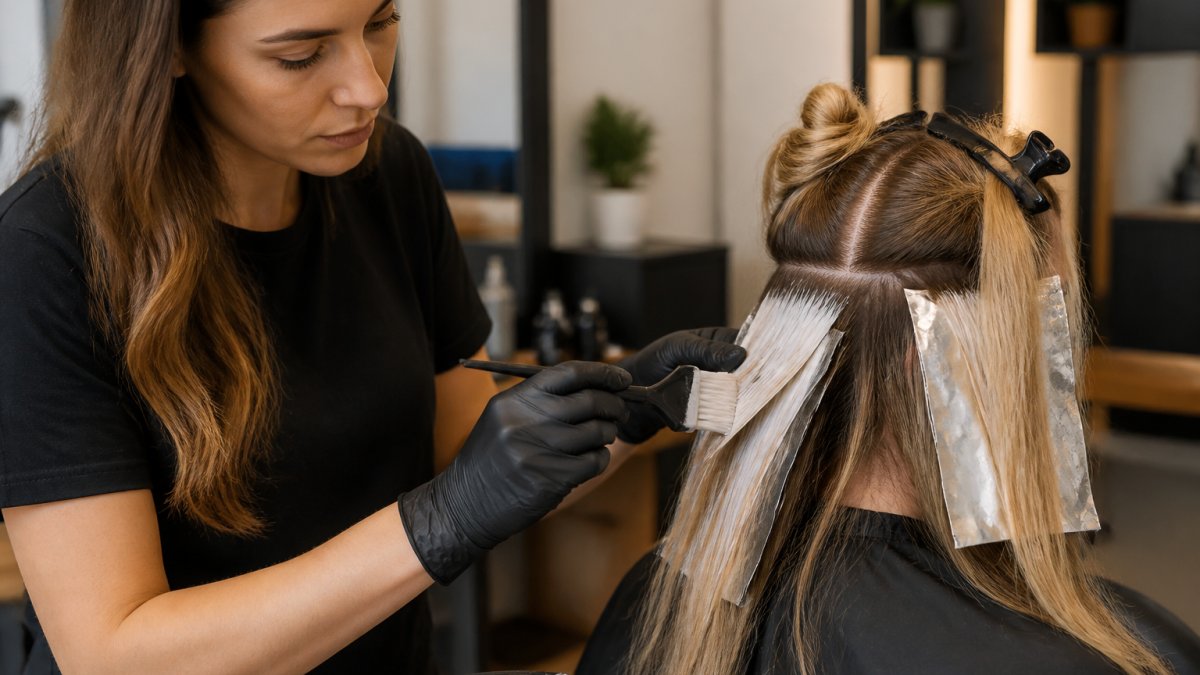
The best professional hair color products lift predictably, mix reliably, process consistently, and minimize damage when applied correctly. The SK Colors system exemplifies this: Pó Plex is a functional bond-protecting complex that addresses the actual mechanism of damage during lightening. Buying wholesale pays for this consistency across every tub in the case.
Evaluate color products by lift capability, processing time, and conditioning additives.
Professional-grade also means batch consistency: wholesale suppliers maintain quality control so the 24th tub performs identically to the first. For salons, this is non-negotiable, colorists need predictable performance to deliver consistent results.
Verifying Authenticity and Authorized Distribution
Diverted stock, counterfeit products, and unauthorized distributors circulate in the professional beauty supply market. A cheaper price from an unauthorized source often signals compromised product: expired inventory, diverted stock, or counterfeit formulations.
Verify your supplier is an authorized distributor for the brands you buy. Manufacturers maintain regional lists, contact the brand directly if uncertain. Authorized distributors provide consistent quality, legitimate warranties, and recourse if product fails.
Red flags include pricing far below market rates, inability to provide batch numbers or manufacturing dates, pressure to buy large quantities without trial, and reluctance to discuss sourcing. Professional distributors like V Colins supply LLC maintain transparent sourcing and document product provenance.
Counterfeits exist, particularly for popular brands. Examine packaging, print quality, label alignment, and seal integrity should match authentic samples, and request documentation including manufacturing dates and batch numbers. Legitimate distributors track this as standard practice.
Wholesale Eligibility, Licensing, and Resale Requirements
Wholesale access in professional hair care is gated by credentialing, and rules vary by state, brand, and distributor. Understanding the documentation stack before applying prevents rejected applications, delayed accounts, and compliance missteps that jeopardize resale margins.
The core credential stack
Most professional distributors require four documents before extending wholesale pricing:
- A valid cosmetology, barbering, or esthetics license in your name or your salon's name, with an active expiration date
- Business registration or articles of incorporation showing your legal entity name
- A state-issued sales tax permit or seller's permit
- A completed resale certificate (sometimes called a resale license or certificate of resale) for the state where you take delivery
The resale certificate is the most misunderstood document. It tells the distributor you're buying inventory for resale rather than personal use, exempting the transaction from sales tax in most states.
Licensing nuances that trip up applications
License requirements differ by state and type. Cosmetology, barbering, and esthetics licenses carry different scopes of practice, and some distributors restrict categories like chemical relaxers or high-lift lighteners to specific license types.
Some brands add eligibility rules beyond state licensing: professional-only color lines may require proof of brand education or a brand-specific application, and others restrict accounts to salons with a physical commercial location.
SK Colors Pó Plex Dust-Free Bleaching Powder | Sarah K Professional Hair →
Resale restrictions by brand and channel
Resale permissions aren't uniform. Many brands permit in-salon retail sales but prohibit online resale on third-party marketplaces; others restrict resale to licensed professionals and ban salon-to-salon transfers.
Before building a retail strategy around a brand, ask the distributor in writing: Can I sell through my salon's website, on marketplaces, or at pop-ups outside my licensed location? Document the answers in your wholesale agreement for recourse if policy changes.
Documentation workflow that speeds approval
Keep a digital folder with current copies of your license, business registration, sales tax permit, resale certificate, and signed wholesale agreement for each distributor. Set renewal reminders, expired credentials freeze accounts and delay reorders, and update distributor records proactively when adding stylists or booth renters.
Salon Supply Inventory Management and Cost Planning
Wholesale purchasing only improves margins when you plan around landed cost and actual usage, not headline unit price.
Build a landed-cost model before you compare suppliers
Landed cost per unit is the number that matters: (case price + inbound freight + handling or drop-ship fees) ÷ units per case. Add carrying costs, storage, insurance, cash you can't deploy elsewhere, and expected waste from expiration or damage.
Compare on the products you reorder most, not a single promotional item.
Set reorder points from usage, not from case size
Measure usage over a full service cycle, typically four to eight weeks, not a single busy week. Count services consuming the product and amount per service, then set a reorder point covering lead time plus a safety buffer.
Target two to three months of supply at wholesale pricing, enough to capture most volume discounts while limiting expiration risk and freeing cash. Adjust upward only for long-shelf-life products with stable, high-volume usage.
Plan margin by channel, not by product alone
Retail and service margins behave differently. For retail resale, calculate gross margin as (retail price − landed cost) ÷ retail price, accounting for shrink, testers, and markdowns.
Build a margin plan: list your top ten products by usage, record landed cost per unit or service, set target prices, and calculate margins. Flag anything below your salon's target so you can renegotiate volume, switch case sizes, or adjust pricing.
Rotation and shelf-life discipline
Professional products typically carry 12- to 24-month shelf lives, and opened products degrade faster than sealed ones. Label cases with receipt dates, rotate first-in-first-out, and track batch numbers to trace problem lots.
Selecting a Professional Hair Care Distributor
Your distributor choice affects product consistency, pricing, availability, and service reliability. Evaluate candidates across several dimensions.
Product Range and Quality. Does the distributor stock the brands your salon uses? Professional hair care supply wholesale means complete product systems, not individual items. V Colins supply LLC curates professional-grade products hand-selected for performance from brands with proven track records in active salons.
Pricing Transparency. Legitimate distributors publish pricing or provide transparent volume-based quotes. Avoid verbal quotes and unpredictable rate changes. Compare pricing across suppliers for products you use regularly, 10-15% variation is normal; above 25% warrants investigation.
Minimum Order Requirements. Some distributors require minimum case purchases or monthly spend. Understand these before opening an account, smaller salons may need lower minimums, while larger operations can negotiate volume discounts.
Availability and Fulfillment. Can the distributor consistently stock what you need? Stockouts undermine service delivery. Ask about reorder lead times and backorder handling, regional warehouses typically fulfill faster than single national locations.
Account Support. Professional distributors provide account management for inventory questions, product recommendations, and service issues, valuable when managing multiple product lines and evaluating new offerings.
According to the Beauty Industry Association's 2026 distributor survey, salons working with dedicated account managers reported 23% fewer stockouts and 31% faster problem resolution compared to those using self-service ordering platforms.
Selecting the right professional hair care supply wholesale partner transforms operational efficiency and service consistency.
Frequently Asked Questions
What licensing do I need to buy professional hair care products at wholesale prices?
Most professional hair care supply wholesalers require proof of a valid cosmetology, esthetics, or barber license issued by your state's regulatory board. Salon owners must provide business registration and a resale license or tax ID. Some distributors verify licenses through state databases. Instructors at accredited cosmetology schools may qualify with institutional credentials. Always confirm your distributor's specific eligibility requirements before placing orders.
How can I verify that wholesale hair products are authentic and not diverted stock?
Buy from authorized distributors who maintain direct relationships with manufacturers. Verify the distributor's authorization status on the brand's official website. Check product packaging for tamper seals, expiration dates, and batch codes. Ask your distributor for documentation of their supply chain. Authentic professional hair care products come with consistent labeling, proper ingredient lists, and warranty support. Avoid unusually discounted prices, which often signal diverted or counterfeit stock.
What products should I stock for a salon managing corrective color and damaged hair?
Stock professional-grade bleaching powders with bond-protecting technology, like SK Colors Pó Plex Dust-Free Bleaching Powder, for controlled lightening. Include sulfate-free shampoos designed for color-treated hair, such as Sarah K Treatment Shampoo, to preserve color vibrancy. Add intensive reconstruction treatments like Sarah K Treatment Reconstructor to repair over-processed hair. Pair these with professional highlighting papers and applicators. Assess your client volume and service mix to determine case quantities and reorder frequency.
How do I calculate the total cost of ownership for wholesale salon supplies?
Beyond unit price, factor in minimum order quantities, shipping costs, and bulk case pricing. Track product shelf life and spoilage rates, expired inventory is wasted margin. Consider storage space requirements for case quantities. Compare your current per-unit cost against wholesale pricing, accounting for volume discounts. Calculate how often you reorder and whether bulk buying reduces frequency, saving on shipping. Factor in any educator discounts or loyalty programs. Review margin targets: ensure wholesale pricing supports your business goals.