

Last Updated: October 23, 2026
Quick Summary
Salon hair color products fall into four working categories: permanent color lifts and covers, demi-permanent deposits tone, semi-permanent refreshes the surface, and lightener removes pigment to build a clean canvas. Match the formula to the service first, then adjust developer strength, mixing ratio, and processing time to the client's hair condition and goal.
- Permanent color delivers full gray coverage and reliable lift, but it is the most committed option once pigment enters the cortex.
- A demi-permanent gloss typically needs a salon refresh every four to six weeks, so quote that cadence at consultation.
- Pre-lighten one level higher than the target vivid shade to keep bold color from looking muddy by week two.
- Isolation sheets come in small ($16), medium ($18), and large ($20) sizes and are reusable for full teams.
- Buy professional color only from suppliers who verify authenticity and hold stock, since diverted product is a liability risk.
Table of Contents
- Quick Comparison: Salon Hair Color Products at a Glance
- What Separates Professional Hair Color From Box Dye
- Permanent Hair Color for Salons: Coverage and Lift
- Demi-Permanent and Semi-Permanent Options for Deposit-Only Services
- Professional Vivid Hair Color and Fashion Shades
- Hair Color Supplies for Salons: Tools That Protect the Result
- How to Choose a Formula by Hair Type, Condition, and Goal
- Pricing, Sourcing, and Professional-Use Considerations
- Frequently Asked Questions
Quick Comparison: Salon Hair Color Products at a Glance
Choosing salon hair color products starts with matching the formula to the service. Permanent color lifts and covers, demi-permanent deposits tone, semi-permanent refreshes, and lightener creates the canvas for everything vivid.
At V Colins Supply, every product we stock has a job: lift, deposit, isolate, or protect. Below is how we group professional hair color, followed by the detail that matters when you're behind the chair with a client in the bowl.

| Category | What It Does | Typical Service | Best For |
|---|---|---|---|
| Permanent | Lifts and deposits; full gray coverage | All-over color, gray coverage, lift | Clients wanting long-lasting, full-coverage results |
| Demi-permanent | Deposits tone with no lift | Toning, glossing, low-commitment gray blending | Blondes needing tone, subtle refresh |
| Semi-permanent | Surface deposit, fades gradually | Fashion refresh, first-time color | Clients testing a shade |
| Lightener | Removes pigment to create lift | Balayage, highlights, vivid prep | Any service needing a clean canvas |
| Vivid/fashion | Bold direct or oxidative color | Creative color, fashion shades | Statement looks, editorial work |
What Separates Professional Hair Color From Box Dye
Professional hair color is a concentrated, customizable formula mixed with a separately chosen developer; box dye is a pre-measured, one-size kit. A colorist adjusts developer strength, mixing ratio, and processing time to the client's hair condition and goal. A box kit makes those decisions for you.
Concentration, Developer Control, and Custom Formulation
Professional dye arrives concentrated so you can dial lift up or down with developer volume. Box dye locks you into a single pre-set developer, which is why results skew uneven on porous or previously colored hair.
The U.S. Food and Drug Administration guidance on hair dye safety is clear that color products carry real risks, including allergic reactions, and recommends patch testing before use.
Permanent Hair Color for Salons: Coverage and Lift
Permanent hair color for salons is the workhorse of the color bar.
Permanent color is not automatically the "strongest" option; it is the most committed. Once pigment is inside the cortex, removing it takes lightener or correction work.
- Full gray coverage: the go-to for clients with significant white hair
- Reliable lift: works with developer to raise level before toning
- Longevity: outlasts demi and semi options
U.S. Occupational Safety and Health Administration standards for salon chemical safety outline employer responsibilities around hazardous chemicals in the workplace, which matters when your team handles color and lightener daily.
Demi-Permanent and Semi-Permanent Options for Deposit-Only Services
Demi-permanent color deposits tone without lifting, using a low-volume developer to open the cuticle just enough for pigment to settle. Semi-permanent skips the developer and stains the surface, fading over several washes.
Demi-permanent is our pick for blondes who need to kill brass without shifting their base; it fades gradually and leaves less line of demarcation at the root. Semi-permanent suits the client who wants a subtle shift or a first taste of color.
| Option | Lift | Gray Coverage | Longevity | Best Use |
|---|---|---|---|---|
| Demi-permanent | None | Blends, does not fully cover | Moderate, fades gradually | Toning, glossing, gray blending |
| Semi-permanent | None | Minimal | Short, fades over washes | Fashion refresh, first-time color |
What Deposit-Only Color Actually Costs in Upkeep
Deposit-only services live or die on the refresh cycle, which is shorter than most clients expect. A demi-permanent gloss typically needs a salon refresh every four to six weeks; a semi-permanent fashion shade may need a top-up every two to four weeks depending on wash frequency and porosity.
Clients who wash daily see semi-permanent shades wash out in half the expected time, and high-porosity hair releases pigment faster than low-porosity hair. That is not a product failure; it is a porosity story, and it belongs in the aftercare conversation.
Aftercare That Protects Deposit-Only Results
- Space washes. Recommend a wash schedule the client can actually keep, and point to sulfate-free cleansers that are gentler on deposited pigment.
- Cooler water. Hot water opens the cuticle and accelerates fade; a cooler rinse at the end of the wash helps seal the surface.
- Patch test every new line. The U.S. Food and Drug Administration guidance on hair dye safety applies to deposit-only formulas too, and a reaction discovered mid-service is a problem no gloss can fix.
Professional Vivid Hair Color and Fashion Shades
Professional vivid hair color is where technique meets nerve. Vivids and fashion shades demand a clean, pre-lightened canvas and precise sectioning, because bold color shows every flaw.
Fashion shades fade faster than natural tones, especially reds and blues, so clients need a realistic aftercare conversation before the first bowl is mixed. Set expectations at consultation, not after the first wash.
Hair Color Supplies for Salons: Tools That Protect the Result
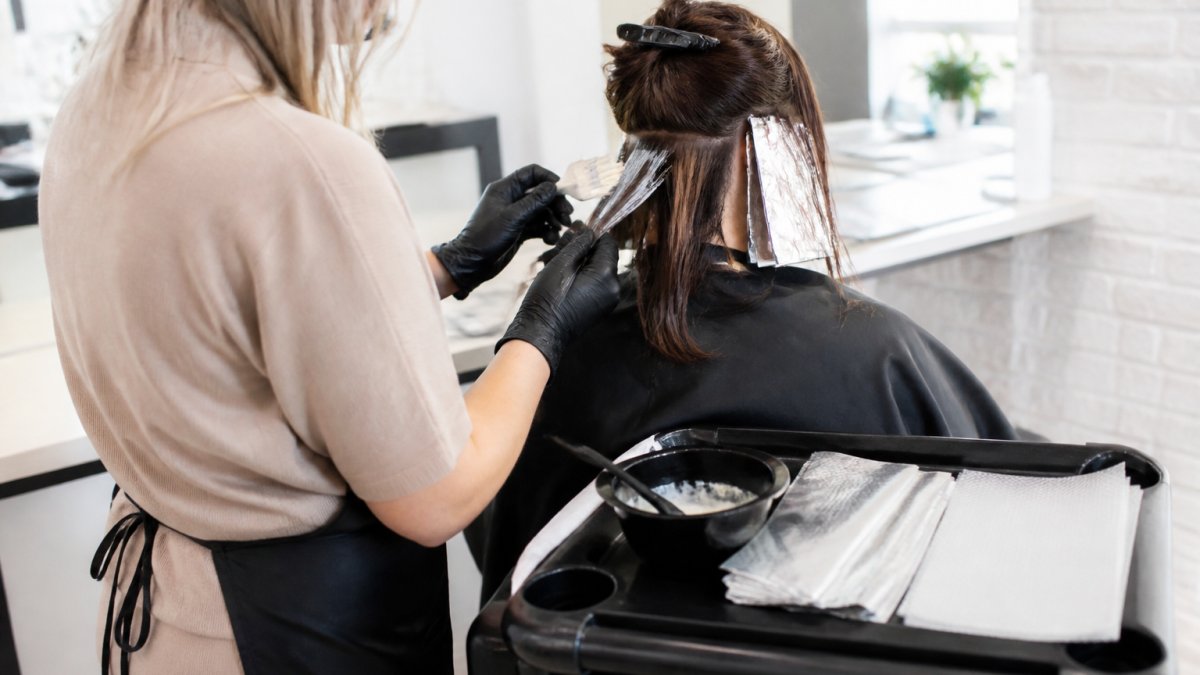
The tools around the color matter as much as the color itself. Good sectioning, clean isolation, and even heat distribution decide whether a formula develops uniformly.
SK Colors Pó Plex Dust-Free Bleaching Powder | Sarah K Professional Hair →
Bleaching Powder, Foils, and Sectioning Tools
Start with lightener. Our SK Colors Pó Plex Dust-Free Bleaching Powder is built for colorists who need lift without wrecking hair integrity: dust-free for a cleaner station, with Pó Plex bond-protecting technology and a Legendary Oils complex for conditioning during the lightening process.

Then control the sections. The Professional Haircoloring Mesh Hair Dyeing Isolation Sheets come in small ($16), medium ($18), and large ($20) sizes.
For foiling, the Sarah K Professional Highlighting Paper uses Air Flow Technology to promote even heat circulation, so color develops uniformly across the section.
Finally, the SK Colors Professional Hair Color Reference Book & Chromatic Guide belongs at the consultation station.
How to Choose a Formula by Hair Type, Condition, and Goal
Formula selection comes down to three inputs: hair type, condition, and the client's goal. Fine hair lifts fast and processes hot, so watch timing. Coarse or resistant hair needs more patience and often a stronger developer. Porous, previously colored hair grabs pigment unevenly and needs a gentler approach.
Here is how we would work through it:
- Assess condition first. Is the hair compromised, over-processed, or porous? If so, avoid stacking permanent color on permanent color.
- Check porosity. High-porosity hair takes pigment fast and releases it fast. Lower the developer and shorten processing.
- Define the goal. Full coverage and lift point to permanent. Tone and shine point to demi. A subtle shift points to semi.
- Match developer to lift. Higher-volume developer means more lift and more stress on the strand. Do not reach for the strongest bottle by default.
- Strand test. Always, especially on corrective work or a first-time client.
Pricing, Sourcing, and Professional-Use Considerations
Professional hair color products are sold for licensed use because concentrated formulas and lighteners carry handling risks that require training. Buy from suppliers who can confirm authenticity and consistent stock; diverted or gray-market product is a reputation risk you cannot afford.
What "Professional-Use" Actually Means
Not every product behind the chair is restricted the same way. The distinction matters for both stylists and consumers:
- Professional-only formulas. Many oxidative colors, high-lift lighteners, and concentrated toners are labeled for licensed professional use and are sold through professional-supply channels. These are the products where developer strength, mixing ratio, and processing time are decisions a trained colorist makes, not defaults a kit supplies.
- Professional-grade but consumer-accessible. Some deposit-only colors, color-depositing masks, and styling-adjacent products are sold to consumers through retail channels. They are gentler by design, but they still carry patch-test guidance and ingredient disclosures.
- Salon tools and supplies. Foils, isolation sheets, tint brushes, and reference guides are generally available to both licensed professionals and consumers, though the economics favor salons buying in team quantities.
Consumers who buy professional-only color online without training often end up with uneven lift, banding, or a reaction they cannot manage. The product is not defective; the application context is missing. That is why salon application differs from at-home use: the colorist adjusts developer, ratio, and timing in real time, correcting tone mid-service when the swatch and strand disagree.

Sourcing Checklist for Salons
- Verify authenticity. Ask suppliers how they source and whether they can trace a batch. Diverted product is a real category in this market.
- Confirm stock depth. A supplier who cannot keep your core lightener and developer in stock disrupts every chair in the building.
- Check labeling and instructions. Manufacturer instructions and safety data should ship with the product, not arrive as a link you have to hunt for.
- Price the service, not just the tube. Cost per service, color plus developer plus tools plus processing time, is the number that matters for margin.
- Know the advertising rules. The U.S. Federal Trade Commission guidance on advertising and endorsements applies to before-and-after claims and testimonials, so keep your marketing honest and documented.
Transparent Pricing on the Tools Side
We publish our tool prices rather than hiding them behind a quote request, because salons run tight margins and deserve to see the cost before they commit. Our isolation sheets run $16, $18, and $20 by size, and our lightener and reference tools are priced for professional back-bar use.
Frequently Asked Questions
What types of salon hair color products do professionals use?
Salons work across four main categories: permanent color for gray coverage and lift, demi-permanent for deposit and toning, semi-permanent for low-commitment shine, and lighteners such as bleaching powder for pre-lightening. Each category pairs with a specific developer strength and processing window. Most back bars also stock a shade reference system, foils or mesh isolation sheets, and a bond-protecting treatment to manage hair condition through the service. The formula you pick should follow the client's goal, not the other way around.
What is the difference between permanent and demi-permanent hair color?
Permanent hair color lifts the cuticle and deposits pigment inside the cortex, so it delivers full gray coverage and the ability to go lighter. Demi-permanent color sits closer to the surface, uses a low-volume developer, and fades gradually over roughly 20 to 28 shampoos. Choose permanent for resistant gray or a base shift, and demi-permanent for refreshing ends, toning after lightening, or a first-time client who wants low commitment. Many colorists combine both in one service.
Which professional hair color products work best for vivid shades?
Vivid and fashion shades hold best when the hair is lifted to a clean, even level first, usually a pale yellow, then toned or filled before the vivid color goes on. Pre-lightening with a bond-protecting bleaching powder protects the internal structure during that lift, which is what keeps fashion shades from going muddy. Apply vivid color to dry, freshly lightened sections and keep the processing time tight. Fade resistance depends more on prep and aftercare than on the pigment itself.
Can salon hair color products be used at home?
Professional color is formulated for licensed application: concentrated pigment, developer ratios you mix yourself, and lighteners that can cause chemical burns or breakage in untrained hands. The label instructions assume a colorist can read porosity, cuticle condition, and underlying pigment. If you want salon-level results at home, book the service rather than buying back-bar product. Retail take-home glosses and color-depositing masks are the safer route for maintenance between appointments.
How should salons compare hair color brands before buying?
Start with the shade range and whether the line covers your most-requested tones, then check the white hair coverage ratios and the developer system the line requires. Ask for swatch accuracy, processing times, and whether the supplier can guarantee consistent stock across multiple locations. Run a strand test on three or four real clients before committing to a full back-bar switch. Price per service matters more than price per tube, so calculate cost per application rather than shelf cost.
Running a color bar means every product has to earn its place, from the lightener that starts the service to the mesh sheets that keep sections clean. V Colins Supply stocks professional-grade salon hair color products and the tools around them, including the SK Colors Pó Plex dust-free bleaching powder, Sarah K highlighting paper, reusable mesh isolation sheets, and the SK Colors reference guide. Shop now and build a back bar your whole team can trust.
