

Last Updated: October 25, 2026
Quick Summary
Reconstruction masks for damaged hair are intensive treatments that penetrate the cortex to restore elasticity, strength, and shine to strands compromised by bleaching, heat styling, chemical treatments, or over-processing. They deliver concentrated proteins, keratin, collagen, and actives that mend broken bonds and rebuild what heat and chemicals broke down.
- Protein masks should be used 1-2 times weekly for severe damage, then reduced to once weekly for maintenance.
- Bleached hair requires protein repair first, then alternating protein and moisture masks, because moisture slides off without structural support.
- Protein overuse causes stiffness and brittleness; pause protein for 2-3 weeks and switch to moisture-only if hair feels straw-like.
- Leave-in treatments like the Sarah K 12 in 1 BB Cream provide daily maintenance between intensive rinse-out mask sessions.
- Fine or low-porosity hair tolerates lightweight moisture masks better than intensive reconstructors, which can leave it limp and coated.
Table of Contents
- What Reconstruction Masks Do for Damaged Hair
- Best Hair Mask Ingredients for Damaged Hair
- Hair Masks for Bleached Hair and Chemically Treated Strands
- How to Repair Severely Damaged Hair with Reconstruction Masks
- How Often to Use a Hair Mask for Optimal Results
- Application Methods: Leave-In Versus Rinse-Out Treatments
- Choosing Your Reconstruction Mask
- Frequently Asked Questions
What Reconstruction Masks Do for Damaged Hair
Reconstruction masks for damaged hair are intensive treatments that penetrate the cortex to restore elasticity, strength, and shine to strands compromised by bleaching, heat styling, chemical treatments, or over-processing.
At V Colins supply LLC, we work with stylists and salon owners facing this daily.
A standard conditioner moisturizes the surface; a reconstruction mask targets the cortex, where hair's strength originates, rebuilding what heat, chemicals, and processing broke down.
When hair is severely damaged, the cuticle becomes raised and porous, so moisture escapes, breakage increases, and shine disappears.
Best Hair Mask Ingredients for Damaged Hair
Most ingredient lists for damaged hair read the same: keratin, collagen, oils, aloe. But they do not all work the same way, and understanding the difference between conditioning and repair ingredients is the most useful thing you can do when choosing a reconstruction mask.
Three categories of ingredients, and what each can actually do
1. Surface conditioners (temporary benefit). Emollients and most oils, including grape seed oil, smooth the cuticle and add shine and slip, but sit on the surface and wash away.
2. Humectants (moisture management). Aloe vera extract, glycerin, and similar ingredients attract and hold water, improving softness and reducing dryness; aloe also soothes an irritated scalp after chemical services.
3. Proteins and bond-repair actives (structural support, with limits). Hydrolyzed keratin, collagen, and bond-repair technologies temporarily fill cuticle gaps and, for bond-repair systems, address some disulfide bonds broken by bleaching and chemical processing.
Ingredient-by-ingredient: benefit, mechanism, and best use
| Ingredient | Category | What it does | Best for | Watch out for |
|---|---|---|---|---|
| Hydrolyzed keratin | Protein | Fills cuticle gaps, adds temporary strength and smoothness | Over-processed, brittle hair | Overuse causes stiffness |
| Collagen (marine or plant-based) | Protein / film-former | Seals cuticle, helps lock in moisture | Color-treated and heat-damaged hair | Not a substitute for moisture |
| Aloe vera extract | Humectant | Holds water, soothes scalp | Dry, chemically treated hair and irritated scalps | Can feel heavy in very fine hair |
| Grape seed oil | Emollient | Lightweight shine and slip, antioxidant support | Fine hair that resists heavy oils | Surface benefit only |
| Bond-repair actives | Bond-repair | Target some broken disulfide bonds | Bleached and chemically processed hair | Use as a course, not a habit |
Matching treatment type to damage type
This is where most routines go wrong: the right mask depends on your damage type, not the marketing.
- Bleached or double-processed hair: the protein matrix and bonds are both compromised. Start with a bond-repair course right after the service, then rotate protein and moisture masks. Do not rely on moisture alone, without structural support, hydration slides off porous hair.
- Heat-styled hair: damage concentrates at mid-lengths and ends and is cumulative. A protein mask every 7-10 days plus a moisture mask on the alternate schedule keeps hair resilient.
- Color-treated but not lightened hair: often needs more moisture support than protein. A nourishing mask with light protein, like the Sarah K My Style Nourishing Mask, is usually a better fit than an intensive reconstructor.
The overuse trap
Strengthening ingredients are not "more is better." Protein and bond-repair actives used too often leave hair stiff, rough, and prone to snapping. If hair feels straw-like after a treatment, pause protein and switch to moisture for two to three weeks. The goal is balance, not maximum strength.
How to read an ingredient label
Ingredients are listed in descending order of concentration, so keratin near the top means a genuine protein treatment; near the bottom, it is mostly a conditioner with a protein claim. A mask labeled for weekly intensive repair should not be used daily.
Putting it together
The best reconstruction mask for damaged hair is not the one with the longest ingredient list, but the one whose treatment type matches your damage, whose actives are present at meaningful levels, and whose frequency fits your texture. Use protein and bond-repair ingredients as targeted tools, humectants and emollients for moisture and softness, and adjust based on how your hair responds.
Hair Masks for Bleached Hair and Chemically Treated Strands
Bleached hair is one of the most severe forms of damage. Bleach strips pigment by breaking down structure, creating porosity that leaves hair unable to retain moisture and prone to breakage (Effects of excessive bleaching on hair).
For bleached and chemically treated hair, the priority is twofold: rebuild protein structure and restore moisture balance.
The ideal approach is a rotation strategy.
Bleached hair is also more susceptible to over-conditioning, where hair absorbs so much moisture it becomes mushy, stretches excessively, and breaks more easily.
Relaxers and perms alter hair structure permanently; reconstruction masks cannot reverse that, but they stabilize the new structure and prevent further degradation.
How to Repair Severely Damaged Hair with Reconstruction Masks
Severely damaged hair requires a strategic approach: rebuild strength without overwhelming hair with too much treatment, which causes brittleness or breakage.
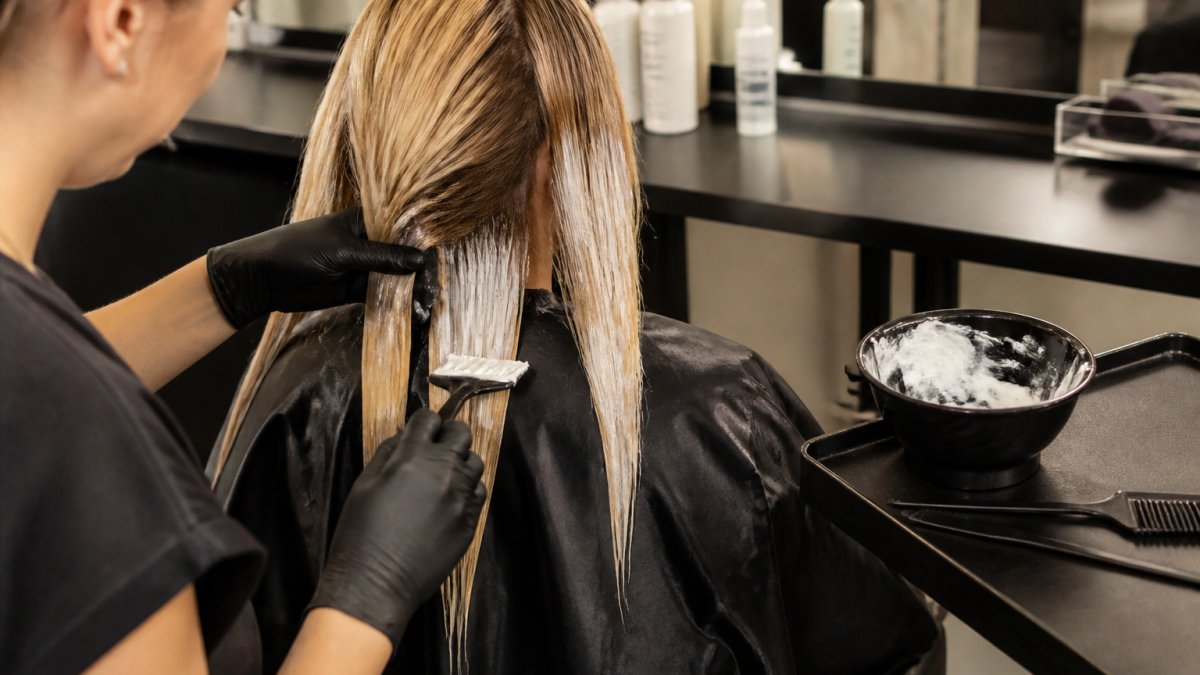
Start with a protein-intensive reconstruction mask. The SK Enjoy Reconstruction Mask delivers intensive repair with Brazilian Keratin and Collagen, penetrating deep into the cortex to rebuild broken bonds.

For extremely severe damage, hair that snaps easily, shows visible breakage, or feels straw-like, use a professional-strength treatment like the Sarah K Treatment Reconstructor.

After the first intensive treatment, follow with a nourishing mask that combines hydration with light protein. The Sarah K My Style Nourishing Mask with Grape Seed Oil, Aloe Vera Extract, and Keratin balances repair with moisture, ideal for the second step in a recovery routine, preventing hair from becoming protein-heavy.

For daily maintenance between masks, use a leave-in treatment. The Sarah K 12 in 1 BB Cream provides heat protection, frizz control, and split-end repair without requiring a rinse.
SK Enjoy Reconstruction Mask →
Watch out: applying protein masks too frequently can cause buildup and brittleness.
How Often to Use a Hair Mask for Optimal Results
Frequency is not a single number, it depends on treatment type, damage severity, and your hair's texture and porosity. The most common mistake is applying an intensive protein treatment on the same schedule as a moisture mask; they do different jobs and should not share a cadence.
Start by identifying what kind of treatment you have
Reconstruction masks fall into three categories, each with its own frequency logic:
- Moisture masks (humectants and emollients such as aloe, glycerin, and lightweight oils) restore water content and softness. They are the most forgiving and can be used frequently.
- Protein and keratin masks deposit hydrolyzed proteins that temporarily fill gaps in the cuticle and cortex. They add strength and reduce breakage, but too much protein leaves hair stiff and brittle.
- Bond-repair treatments work on the disulfide bonds that bleaching and chemical processing break. They are typically used as short, intensive courses rather than as a weekly habit.
A mask that combines keratin and collagen, like the SK Enjoy Reconstruction Mask, sits in the protein category even though it also conditions. Treat it as a strengthening treatment, not a daily conditioner.
A practical frequency framework
| Damage level | Protein or reconstruction mask | Moisture mask | Bond-repair course |
|---|---|---|---|
| Severe (recent bleach, multiple chemical processes, visible breakage) | 1-2 times weekly for 2-3 weeks, then reassess | 1-2 times weekly, alternating with protein | Short course per product directions, then stop |
| Moderate (lightening, regular heat styling, color-treated) | Once weekly | Once or twice weekly | Only after chemical services |
| Minimal or maintenance | Every 2 weeks or as needed | Weekly | Not needed |
For severely damaged hair, the first two to three weeks are the repair window: use a protein-based reconstruction mask once or twice weekly, alternating with a moisture-rich mask so hair does not become protein-heavy. Once elasticity improves and breakage slows, drop the protein mask to once weekly and keep the moisture mask at once or twice weekly.
Adjust for hair texture and porosity
- Fine or low-porosity hair absorbs heavy proteins and rich emollients slowly. A lightweight moisture mask used twice weekly usually works better than an intensive reconstruction mask used weekly, which can leave fine hair limp and coated. If you use a protein mask, keep it to once every 7-10 days and watch for stiffness.
- Coarse or high-porosity hair loses moisture quickly and tolerates more frequent intensive treatments. Twice-weekly reconstruction masks are often appropriate during a repair phase, paired with a leave-in to hold hydration between washes.
- Curly and coily hair tends to be drier and more fragile at the ends. Many curlies do well with a moisture mask on every wash day and a protein mask every second or third wash, depending on how the hair responds.
Signs you are over-conditioning or over-proteinizing
Both problems look similar from the outside but call for opposite fixes.
Signs of over-conditioning (moisture overload): hair feels mushy or spongy when wet; stretches a long way without snapping back; feels limp and gummy; breaks during normal combing. Fix: reduce moisture mask frequency and reintroduce a protein mask once weekly until elasticity returns.
A simple stretch test helps you tell them apart. Take a wet strand and pull gently. If it snaps almost immediately, you likely need moisture. If it stretches far and does not rebound, you likely need protein. If it stretches slightly and returns to shape, your balance is close to right.
The bottom line on frequency
Use the schedule as a starting point, then let the hair tell you what to adjust: soft, elastic hair means your cadence is working; dry and straw-like means increase moisture; stiff and brittle means back off protein. Reassess every two to three weeks rather than locking into a fixed routine.
Application Methods: Leave-In Versus Rinse-Out Treatments
Rinse-out masks and leave-in treatments serve different purposes in a damage-repair routine.
Rinse-out masks are intensive treatments applied after shampooing, left on for 5-20 minutes, then rinsed thoroughly.
Leave-in treatments are lightweight formulations applied to damp or dry hair and not rinsed out.
A complete routine combines both: a rinse-out reconstruction mask 1-2 times weekly for intensive repair, plus a leave-in treatment daily or as needed for maintenance and protection. This layering addresses both deep structural repair and surface protection.
For salon professionals, rinse-out masks are ideal for treatment services, they show immediate, dramatic results and justify a service charge.
Choosing Your Reconstruction Mask
The right reconstruction mask depends on damage type, hair texture, and treatment goals.
For bleached hair requiring intensive repair, the SK Enjoy Reconstruction Mask combines Brazilian Keratin and Collagen in a salon-professional formulation.
Browse the full professional treatments collection to find the right mask for your specific damage profile and treatment goals.
Repairing severely damaged hair requires the right tools and a strategic approach.
Frequently Asked Questions
What is the difference between a deep-conditioning mask and a reconstruction mask?
Deep-conditioning masks focus on hydration and moisture restoration, using humectants and emollients to seal water into the hair shaft. Reconstruction masks target structural damage by rebuilding broken protein bonds and restoring elasticity using ingredients like keratin and collagen. For severely damaged, bleached, or chemically treated hair, reconstruction masks address the underlying damage, while deep-conditioning masks maintain moisture between treatments.
Can a reconstruction mask repair bleached or overprocessed hair?
Yes. Reconstruction masks are specifically formulated to repair the structural damage bleaching and chemical processing cause. They rebuild broken bonds, restore elasticity, and smooth the cuticle. Products like SK Enjoy Reconstruction Mask and Sarah K Treatment Reconstructor use keratin and protein complexes to penetrate the cortex and restore strength to over-processed strands.
How often should you use a reconstruction mask on damaged hair?
For severely damaged hair, use a reconstruction mask 1-2 times per week, depending on damage level and the product. Monitor your hair's response: if it feels stronger and less brittle, maintain that frequency. If breakage persists, increase to twice weekly. Once hair improves, reduce to once weekly for maintenance.
What ingredients should you look for in a hair mask for damaged hair?
Prioritize keratin, collagen, and protein-bond complexes to rebuild structural integrity. Grape seed oil and aloe vera extract provide hydration and antioxidant protection. Vegan collagen and plant-based actives deliver nourishment without animal products. Look for masks with a balanced pH (around 4.5-5.5) to seal the cuticle and lock in benefits. The best masks combine protein reconstruction with deep moisture.
Is it better to use a hair mask on wet or dry hair?
Most reconstruction masks work best on damp, towel-dried hair after shampooing. Damp hair absorbs treatment more evenly. For intensive repair, apply the mask to dry hair 15-30 minutes before washing, this extended contact time allows deeper penetration. Sarah K My Style Nourishing Mask supports both methods. Avoid soaking wet hair, which dilutes the treatment; towel-dry first to maximize ingredient effectiveness.
